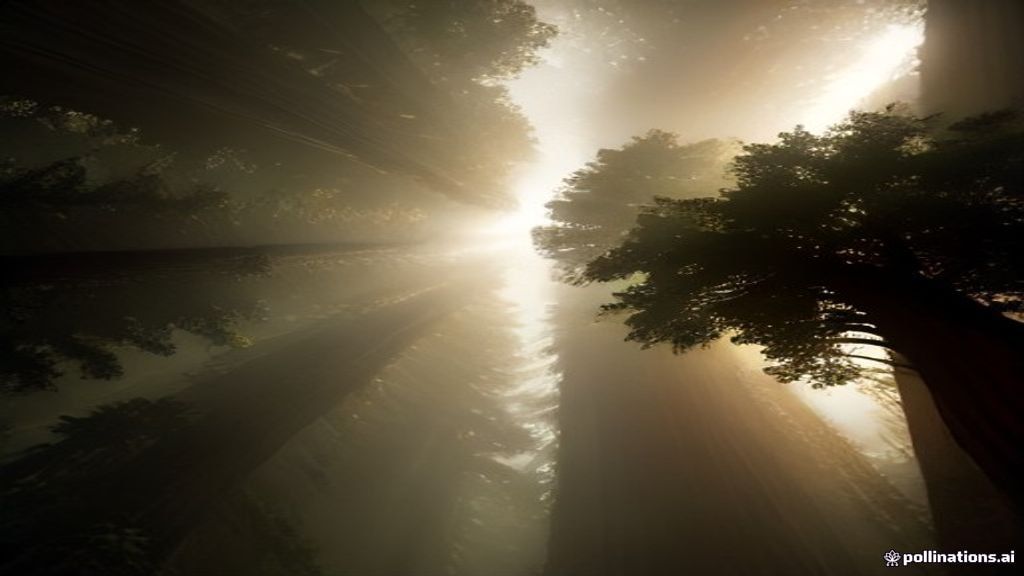
🌲 Paleo-Botanical Monograph: Subfamily Sequoioideae
A rigorous scientific analysis of the Earth’s most colossal woody organisms: Coast Redwood (Sequoia sempervirens) and Giant Sequoia (Sequoiadendron giganteum). Details taxonomic distinctions, hydraulic lifting limitations, thick fibrous bark fire insulation, and conservation paleobiology.
Among all living organisms on Earth, none inspire greater reverence, command greater structural presence, or capture the imagination of naturalists more profoundly than the ancient redwoods. Belonging to the cypress family Cupressaceae, within the specialized conifer subfamily Sequoioideae, these majestic gymnosperms represent the surviving remnants of a once-vast, ancient lineage that dominated the temperate and boreal landscapes of the Northern Hemisphere throughout the Jurassic and Cretaceous periods. Today, this relict lineage survives in three distinct, monotypic genera: the Coast Redwood (Sequoia sempervirens), the Giant Sequoia (Sequoiadendron giganteum), and the critically endangered Dawn Redwood (Metasequoia glyptostroboides) of central China.
The structural feats achieved by these trees defy ordinary biological expectations. Coast Redwoods represent the tallest living organisms on our planet, routinely surpassing 100 meters (with the record-holding specimen ‘Hyperion’ reaching 116.07 meters), while Giant Sequoias represent the most voluminous single-stem organisms on Earth, with specimens such as the ‘General Sherman’ tree boasting a wood volume exceeding 1,487 cubic meters and an estimated mass of over 2,100 metric tons. Achieving such colossal dimensions and sustaining individuals across chronological lifespans exceeding two to three millennia requires extraordinary physiological adaptations: specialized foliar water uptake from maritime fog, hyper-thick fibrous fire-resistant bark, rot-proof tannin-infused heartwood, and hydraulic vascular systems engineered to push water to the physical limits of cohesion-tension physics. This dissertation delivers an in-depth botanical study of the taxonomy, anatomy, hydraulic physiology, and fire ecology of these forest titans.
1. Taxonomic Comparison: Sequoia sempervirens vs. Sequoiadendron giganteum
Although commonly conflated in popular discourse under the umbrella term ‘redwoods,’ Coast Redwoods and Giant Sequoias are distinct species belonging to different genera, occupying vastly different geographic ranges, microclimatic zones, and ecological niches in California and southwestern Oregon:
1. Coast Redwood (Sequoia sempervirens): Native exclusively to a narrow, discontinuous coastal strip stretching roughly 750 kilometers from southern Monterey County, California, to Curry County, Oregon. This maritime zone rarely extends more than 50 kilometers inland, strictly bounded by the reach of summer coastal marine fog layers. Morphologically, Coast Redwoods feature dimorphic foliage: foliage on lower and shade branches consists of flat, two-ranked needles (15 to 25 millimeters long) resembling yew needles, while upper sun-exposed foliage forms small, scale-like, awl-shaped needles closely pressed to the stem. The seed cones are relatively small—measuring only 15 to 30 millimeters in length—and mature in a single season. The species exhibits an extraordinary capacity for vegetative reproduction, readily producing basal burl sprouts, root collar shoots, and suckers following fire or physical damage, earning it the specific epithet sempervirens (‘ever-living’).
2. Giant Sequoia (Sequoiadendron giganteum): Restricted to approximately 73 isolated, natural groves scattered along the western slope of California’s Sierra Nevada mountain range, at elevations between 1,400 and 2,150 meters. The climate here is montane, characterized by hot, dry summers and heavy winter snowpacks. Unlike the Coast Redwood, the foliage of the Giant Sequoia is uniform throughout the tree: small, scale-like, awl-shaped needles (3 to 6 millimeters long) arranged spirally around the twig, resembling the foliage of a massive juniper. The cones of Giant Sequoia are substantially larger (4 to 7 centimeters long), woody, and can remain green, closed, and viable on the branches for up to two decades without opening, waiting for fire shock. Unlike Coast Redwoods, Giant Sequoias possess virtually zero capacity to reproduce vegetatively from stumps or burls; they reproduce exclusively via seeds.
3. Dawn Redwood (Metasequoia glyptostroboides): The Living Fossil. Known only from Mesozoic fossil deposits until 1944, when Chinese botanists discovered living groves in Hubei Province, China. Unlike its North American evergreen relatives, Metasequoia is fully deciduous, shedding its soft, feathery, opposite-arranged needles and small lateral branchlets together each autumn after turning radiant shades of copper and gold. Today, Metasequoia is planted globally as an exceptional ornamental tree, completing the triumvirate of subfamily Sequoioideae.
| Botanical Character | Coast Redwood (Sequoia sempervirens) | Giant Sequoia (Sequoiadendron giganteum) | Dawn Redwood (Metasequoia glyptostroboides) |
|---|---|---|---|
| Primary Habitat | Maritime coastal fog belt (<50 km inland) | Montane Sierra Nevada groves (1,400-2,150m) | River valleys of Hubei/Hunan, China |
| World Record Metric | World’s Tallest Tree (116+ m) | World’s Most Voluminous Tree (1,487 m³) | Living fossil; deciduous conifer (~45m) |
| Foliage Type | Dimorphic: flat 2-ranked (shade) / awl (sun) | Uniform: small awl-shaped, scale-like | Deciduous, opposite, soft pinnate needles |
| Cone Dimensions | Small (1.5 – 3.0 cm) | Medium-Large (4.0 – 7.5 cm), woody | Small-Medium (1.5 – 2.5 cm), peltate |
| Sprouting Capacity | Profound (basal burls, stump sprouting) | None (strictly seed reproduction) | Moderate (can sprout from collar) |
| Fire Adaptation | Fibrous bark, epicormic resprouting | Fibrous bark (up to 60cm thick), serotiny | Thin bark, riparian flood-tolerant |
2. Maximum Tree Height and Hydraulic Physics
Why do trees stop growing taller? The physical limit to tree height has fascinated tree physiologists for over a century. In 2004, a landmark research study published in the journal Nature by Koch and colleagues established that the maximum theoretical biophysical height limit for living trees lies between 122 and 130 meters, with Coast Redwoods approaching the absolute ceiling of this limit.
The fundamental constraint is water transport governed by the cohesion-tension theory. To lift water from root networks to leaves located 115 meters in the air, a tree must overcome two immense physical forces: gravitational head (0.01 MPa per meter of vertical height) and hydraulic frictional resistance through microscopic tracheid conduits. At the crown summit of a 112-meter redwood, xylem water potential reaches catastrophic negative values approaching -1.9 to -2.2 MPa. Under this immense tension, water columns are at constant risk of cavitation (breaking under tension and forming air bubbles).
To cope with this hydraulic bottleneck, redwood leaves at the top of the canopy undergo extreme structural modifications: they become miniaturized, succulent, and heavily sclerified with small, tightly packed cells, displaying low photosynthetic capacities and reduced stomatal conductance. Furthermore, redwoods exploit a remarkable bypass mechanism: foliar water uptake. During dense summer fog events, Coast Redwoods absorb liquid water droplets directly through their leaf cuticles and stomata into the foliage mesophyll, reversing normal sap flow and rehydrating the upper canopy without expending root-to-shoot hydraulic energy.
3. Fire Ecology: Bark Insulation and Serotinous Dynamics
Fire is not a destructive agent in ancient redwood and sequoia forests; it is the vital ecological architect that maintains their survival. Both Sequoia and Sequoiadendron have evolved profound morphological armaments to survive frequent, low-to-moderate intensity wildfire regimes that historically cleared the forest understory every 5 to 25 years.
The primary thermal shield is their extraordinary rhytidome (outer bark). In mature Giant Sequoias, the bark can achieve a thickness of 30 to 60 centimeters (over two feet thick). This bark is deeply furrowed, spongy, and fibrous, composed of non-resinous cellular tissue rich in fire-retardant tannic acids. Because the bark contains minimal flammable resin channels and possesses air-filled cellular voids, it provides phenomenal thermal insulation, shielding the living vascular cambium from mortal heat damage even as intense surface fires scorch the exterior trunk for hours.
In Giant Sequoias, fire is also required for reproductive regeneration. Sequoia cones are serotinous and sealed tightly on branches. When a surface fire sweeps through the understory, hot convective air currents rise into the lower crown, drying the cone scales and causing them to shrink and crack open. Over the subsequent weeks, millions of tiny winged seeds rain down from the canopy onto a newly exposed, nutrient-rich mineral ash bed where competing white firs (Abies concolor) and incense cedars (Calocedrus decurrens) have been eliminated. Without periodic fire, sequoia seeds land on deep, dry organic needle duff, where they desiccate and die before their embryonic roots can contact moist mineral earth.
The Role of the Longhorned Beetle and Douglas Squirrel
In the absence of wildfire, two small animals facilitate sequoia seed dispersal: the Sequoia Wood-boring Beetle (Phymatodes nitidus) and the Douglas Squirrel (Tamiasciurus douglasii). The larvae of the beetle mine through cone scales, severing vascular tissues and causing the scales to dry, shrink, and release seeds. The Douglas squirrel systematically harvests and caches fleshy green sequoia cones, tearing scales apart and unintentionally dispersing thousands of seeds across the forest floor.
4. Tannin Chemistry and Heartwood Rot Resistance
When an ancient Coast Redwood or Giant Sequoia eventually falls—frequently due to windthrow during severe winter blizzards or root destabilization along stream banks—its trunk does not decompose quickly like an oak, beech, or maple. Redwood heartwood logs can remain intact on the damp forest floor for over a thousand years without succumbing to fungal rot or insect attack.
This legendary rot-resistance stems from the high concentration of condensed tannins (proanthocyanidins) and phenolic compounds infused throughout the heartwood cells during the transition from active sapwood to dead heartwood. These tannins impart the characteristic deep reddish-cinnamon color to the wood. Chemically, these polyphenols bind to microbial enzymes, disrupting the metabolic functions of wood-decay fungi (such as brown-rot and white-rot basidiomycetes) and deterring subterranean termites and carpenter ants. This biochemical longevity ensures that fallen redwoods serve as persistent ‘nurse logs,’ nurturing generations of mosses, lichens, ferns, and hemlock saplings for centuries.
5. Canopy Ecosystems: The Arboreal Frontier
Historically, commercial industrial logging in the 19th and 20th centuries devastated the old-growth Coast Redwood biome, clear-cutting more than 95 percent of original ancient stands. Today, remaining old-growth groves are protected within national and state park reserves (such as Redwood National and State Parks and Sequoia & Kings Canyon National Parks). Pioneering canopy research over the past two decades—led by canopy arborists utilizing non-invasive rope ascent techniques—has revealed that the ancient redwood canopy constitutes a virtually unexplored three-dimensional ecosystem.
Hundreds of feet in the air, reiterated trunk systems (independent vertical trunks sprouting directly from massive horizontal limbs), vast soil mats formed from centuries of decaying needles (arboreal soil measuring up to a meter in depth), epiphytic fern gardens (such as the leather fern Polypodium scouleri), and rare canopy-dwelling wandering salamanders (Aneides vagrans) live out their entire lifecycles without ever touching the forest floor. These hanging gardens support endemic invertebrate communities and store millions of gallons of intercepted fog water, buffering the forest microclimate against regional summer heatwaves.
6. Climate Change Threats and Mega-Fire Vulnerabilities
Despite their millennia-long endurance through past ice ages and megadroughts, giant sequoias and coast redwoods now face unprecedented challenges from anthropogenic climate disruption. In the Sierra Nevada, a century of strict fire suppression has allowed immense fuel loads of white fir and incense cedar to accumulate beneath giant sequoia groves. Compounded by multi-year megadroughts and hotter summer temperatures, recent catastrophic wildfires (such as the 2020 Castle Fire and 2021 KNP Complex) generated extreme plume-dominated fire behavior with flame lengths exceeding 100 feet. These mega-fires entered the upper crowns of mature sequoias, killing an estimated 10 to 14 percent of the global population of large sequoia trees in a single fire season.
Simultaneously, coastal marine fog frequency along the Northern California coastline has declined by an estimated 33 percent over the past century. Because coast redwoods rely on fog to satisfy up to 30 to 40 percent of their annual transpirational water demand, reduced fog exposure exacerbates crown drought stress. In response, conservation coalitions—including the Save the Redwoods League, the National Park Service, and indigenous tribal groups—are mobilizing unprecedented restoration initiatives: reintroducing cultural prescribed burning, mechanically thinning hazardous midstory fuels, and engineering protected migration corridors to ensure these prehistoric giants endure for the next thousand years.
7. Burl Morphology, Lignotubers, and Vegetative Cloning Architecture
One of the most extraordinary biological capabilities of the Coast Redwood (Sequoia sempervirens) is its capacity to generate basal burls and lignotuberous swellings packed with thousands of dormant vegetative bud meristems. When an ancient redwood trunk is damaged, toppled by heavy winter storms, or girdled by surface fire scorch, these dormant bud reserves are released from apical hormonal suppression (auxin inhibition).
Within weeks, hundreds of vigorous, genetically identical clonal suckers erupt from the basal burl, feeding on the massive parent root system. Over decades, these clonal sprouts compete for light and space, eventually growing into a circular ring of mature redwood trunks encircling the decayed footprint of the original ancestor tree. Foresters refer to this striking circular growth form as a fairy ring or ‘cathedral grove.’ Through continuous reiterate sprouting across centuries, a single redwood genetic clone can persist dynamically across thousands of years, transferring water, carbohydrates, and mineral nutrients through shared root grafts. Furthermore, modern tissue culture laboratories and conservation botanists utilize micro-propagation of burl bud meristems to clone superior old-growth champion trees, banking genetic germplasm to reforest deforested coastal valleys and protect against illegal burl poaching.