🍁 Plant Biochemistry Monograph: Autumn Senescence
A rigorous biochemical investigation into foliar senescence, the enzymatic degradation of chlorophyll molecules, the unmasking of structural carotenoids, the de novo synthesis of vacuolar anthocyanins, the co-evolutionary signaling hypothesis, and petiole abscission layer formation in temperate deciduous woodlands.
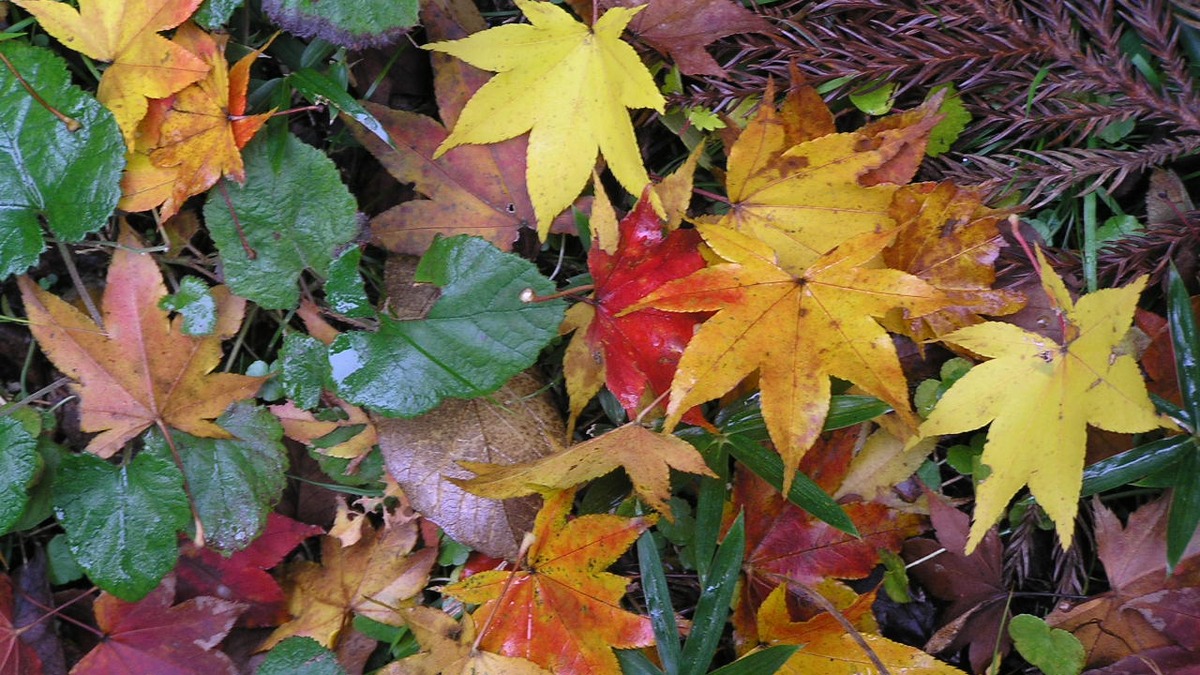
Each autumn across the temperate deciduous forests of North America, East Asia, and Europe, millions of square kilometers of green forest canopies erupt into a breathtaking spectacle of crimson, scarlet, amber, orange, and gold. While celebrated globally as one of the most stunning aesthetic phenomena in nature, autumn leaf coloration is fundamentally a high-stakes, tightly orchestrated biochemical dismantling process known as foliar senescence. Far from being a passive, dying collapse of exhausted leaves, senescence is an active, genetically programmed recycling program that salvages vital, growth-limiting nutrients from the foliage before winter freezing destroys the canopy.
During senescence, a deciduous tree systematically breaks down cellular proteins, lipids, nucleic acids, and photosynthetic pigments, remobilizing up to 50 to 80 percent of foliar nitrogen, phosphorus, and potassium back into perennial woody tissues—the sapwood, trunk bark, and roots—where they are stored in specialized vegetative storage proteins (VSPs) until spring budburst. The brilliant colors that emerge during this process are the visual manifestations of shifting pigment chemistries: the degradation of light-absorbing chlorophylls, the unmasking of durable carotenoids, and the energetically costly, de novo biosynthesis of protective anthocyanin pigments. This dissertation provides an in-depth biochemical and physiological exploration of the mechanisms driving autumnal leaf coloration and leaf abscission.
1. Environmental Triggers: Photoperiod, Temperature, and Phytochromes
The initiation of autumn senescence is governed by two primary external environmental cues interacting with the tree’s internal genetic clock: photoperiod (daylength) and ambient temperature.
The primary, unwavering master clock is photoperiod. Unlike weather patterns, which fluctuate unpredictably from year to year, photoperiod is astronomically constant at any given latitude. Trees detect subtle reductions in daylength through specialized photoreceptor proteins known as phytochromes (specifically phytochrome A and phytochrome B). Phytochromes toggle reversibly between two conformational states: an inactive red-light-absorbing form (Pr) and an active far-red-light-absorbing form (Pfr). As autumn days shorten and nights lengthen, the prolonged duration of darkness allows active Pfr to revert back to inactive Pr. When the ratio of Pfr to total phytochrome drops below a genetically calibrated critical threshold, a hormonal cascade is initiated:
- The synthesis of growth-promoting hormones—predominantly auxin (indole-3-acetic acid, IAA), cytokinins, and gibberellins—plunges precipitously within the leaf blade.
- Concurrently, the synthesis and signaling of senescence-promoting phytohormones—primarily ethylene and abscisic acid (ABA)—surges.
While photoperiod sets the precise seasonal timing for the onset of senescence, temperature dictates the speed and vibrancy of the chemical transition. Crisp, cool, non-freezing night temperatures (between 2 and 7 degrees Celsius) combined with bright, sunny, cloudless autumn days accelerate chlorophyll breakdown while supercharging the enzymatic synthesis of brilliant red anthocyanin pigments. Conversely, early hard freezes kill leaf cells before the nutrient resorption process can complete, causing leaves to turn brown and wither prematurely without developing vibrant colors.
| Pigment Class | Primary Compounds | Color Spectrum | Site of Synthesis / Storage | Phenological Timing in Foliage |
|---|---|---|---|---|
| Chlorophylls | Chlorophyll a, Chlorophyll b | Deep green, olive green | Thylakoid membranes (Chloroplast) | Spring/Summer; degrades rapidly in Autumn |
| Carotenoids (Carotenes) | Beta-carotene, Alpha-carotene | Vibrant orange | Thylakoids (Chloroplast / Chromoplast) | Present all season; unmasked as chlorophyll fades |
| Carotenoids (Xanthophylls) | Lutein, Zeaxanthin, Violaxanthin | Bright yellow, golden | Thylakoids (Chloroplast / Chromoplast) | Present all season; unmasked as chlorophyll fades |
| Anthocyanins | Cyanidin-3-glucoside, Delphinidin | Brilliant red, scarlet, purple | Vacuolar sap (Cytoplasm) | Synthesized de novo in late Autumn under bright sun |
| Tannins | Condensed tannins, Polyphenols | Dull brown, bronze, tan | Cell walls and central vacuoles | Persistent waste compounds; remain after all pigments decay |
2. Chlorophyll Degradation: The PAO Pathway
Chlorophyll—the porphyrin-ring molecule containing a central magnesium ion that captures solar photons to drive the light reactions of photosynthesis—is the dominant pigment in summer leaves, masking all underlying pigments with its intense green color. Chlorophyll a and Chlorophyll b are continuously synthesized and degraded throughout the summer. However, as senescence begins, synthesis is arrested, and the Pheophorbide a Oxygenase (PAO) pathway is activated to dismantle chlorophyll molecules and salvage the precious nitrogen bound within them.
The molecular steps of chlorophyll breakdown proceed through a tightly controlled enzymatic chain:
- Dephytylation: The enzyme chlorophyllase or pheophytinase cleaves the hydrophobic phytol tail from the chlorophyll molecule, converting it into water-soluble chlorophyllide.
- Magnesium Dechelation: The enzyme magnesium dechelatase extracts the central magnesium atom (Mg2+) from the porphyrin ring, yielding pheophorbide a. The liberated magnesium is loaded into the phloem and translocated to perennial tissues.
- Ring Opening: The key regulator of the pathway, pheophorbide a oxygenase (PAO), breaks open the four-ring tetrapyrrole macrocycle, eliminating the molecule’s ability to absorb visible green light.
- Reduction to Non-Fluorescent Catabolites: Subsequent enzymes reduce the opened ring into colorless, non-fluorescent chlorophyll catabolites (NCCs), which are safely sequestered inside the central vacuole of the cell.
This rapid degradation is critical because free, uncoupled chlorophyll molecules exposed to sunlight are potent photosensitizers. If left intact outside the photosynthetic electron transport chain, free chlorophyll transfers solar energy directly to molecular oxygen, generating lethal reactive oxygen species (ROS) such as singlet oxygen and superoxide radicals that would rupture cellular membranes before nutrient retrieval is complete.
3. Unmasking the Carotenoids: Yellows and Oranges
As the intense green of chlorophyll vanishes, the underlying carotenoid pigments are revealed to the naked eye. Carotenoids are lipid-soluble, isoprenoid-derived accessory pigments synthesized in plastids. Unlike anthocyanins, carotenoids are not created during autumn; they have been present inside the chloroplast thylakoids throughout the entire spring and summer growing season, where they played two vital roles: accessory light harvesting (capturing blue-green photons) and photoprotection via the xanthophyll cycle, which quenches excess excitation energy as heat.
Carotenoids are divided into two primary chemical classes:
- Carotenes: Pure hydrocarbon pigments lacking oxygen atoms, predominantly beta-carotene. Beta-carotene absorbs blue and green wavelengths, reflecting brilliant orange light. Trees with high beta-carotene ratios—such as Sassafras (Sassafras albidum) and Sweetgum (Liquidambar styraciflua)—display fiery orange tones.
- Xanthophylls: Oxygenated carotenoids containing hydroxyl groups, including lutein, zeaxanthin, and violaxanthin. Xanthophylls reflect clear yellow and golden wavelengths. Tree species such as American Beech (Fagus grandifolia), Tuliptree (Liriodendron tulipifera), Quaking Aspen (Populus tremuloides), and Birches (Betula spp.) synthesize predominantly xanthophylls and virtually zero anthocyanins, resulting in radiant, pure golden-yellow autumn canopies.
Because carotenoid molecules are chemically stable and degrade much more slowly than chlorophyll, their golden tones persist for weeks on the tree and continue to illuminate the forest floor long after leaf drop.
4. Anthocyanin Biosynthesis: The Mystery of Red and Purple
While the emergence of yellow and orange carotenoids is a passive ‘unmasking’ event, the appearance of flaming reds, purples, and scarlets represents an active, energetically expensive physiological phenomenon. In trees such as Sugar Maple (Acer saccharum), Red Maple (Acer rubrum), Scarlet Oak (Quercus coccinea), Winged Sumac (Rhus copallinum), and Dogwoods (Cornus florida), the brilliant red color is produced by anthocyanins—specifically cyanidin-3-glucoside.
Anthocyanins are water-soluble flavonoid pigments dissolved in the aqueous sap of the leaf cell vacuoles. Unlike carotenoids, anthocyanins are absent from summer foliage. They are synthesized de novo in late summer and early autumn via the phenylpropanoid biosynthetic pathway. The process requires a high concentration of simple sugars (glucose and sucrose) trapped within the leaf blade, catalyzed by the enzyme UDP-glucose:flavonoid 3-O-glucosyltransferase (UFGT).
For decades, evolutionary biologists debated the purpose of anthocyanin synthesis: Why would a tree expend valuable metabolic energy and sugar to synthesize complex red pigments in leaves that are doomed to fall off the tree within days? Modern research has resolved this paradox with the Photoprotection and Antioxidant Hypothesis:
- Optical Sunscreen: During late senescence, the photosynthetic machinery is partially disassembled, making it exceptionally vulnerable to photoinhibition (light-induced damage). Anthocyanins deposited in the upper palisade cells act as an optical filter, absorbing excess high-energy blue, green, and ultraviolet photons and shielding the delicate, dismantled chloroplasts below.
- Free Radical Scavenging: Cold temperatures slow biochemical reaction rates, causing electrons to back up in the electron transport chain and generating dangerous reactive oxygen species. Anthocyanins are potent antioxidants that directly neutralize free radicals, keeping leaf cells alive and functionally intact long enough to pump out the last reserves of nitrogen and phosphorus.
5. The Co-Evolutionary Signaling Hypothesis
In addition to physiological photoprotection, an intriguing evolutionary hypothesis proposed by W.D. Hamilton and Marco Archetti suggests that brilliant red autumn coloration serves as an honest warning signal (aposematism) to insect pests. In autumn, migrating aphids (such as the apple aphid Rhopalosiphum insertum) search for host trees on which to lay their overwintering eggs.
Aphids landing on weakened, stressed trees find inferior nutritional sap and low survival rates for their offspring. Hamilton postulated that trees displaying the most dazzling, vivid scarlet and crimson foliage are signaling superior chemical defenses (high tannin and polyphenol levels) and robust metabolic vigor. Field trials have shown that aphids preferentially avoid intensely red-colored leaves in favor of yellow or dull foliage, reducing pest infestation in the subsequent spring. This co-evolutionary interaction demonstrates that autumn leaf colors may function simultaneously as physiological sunscreens and ecological defense shields.
6. Anthocyanin Vacuolar Trapping and Flavonoid Cellular Localization
At the subcellular level, newly synthesized anthocyanins are translocated from the cytosolic surface of the endoplasmic reticulum into the central vacuole via ATP-binding cassette (ABC) transporters and multidrug and toxic compound extrusion (MATE) tonoplast proteins. Once inside the acidic vacuolar lumen (pH 4.5 to 5.5), anthocyanins undergo chemical stabilization.
The precise hue observed by human eyes is governed by vacuolar pH and co-pigmentation complexes. Under acidic conditions, the flavylium cation form dominates, yielding brilliant crimson and scarlet reds. In species with slightly higher vacuolar pH, or where anthocyanins form supramolecular complexes with colorless flavones and metallic cations (such as aluminum or iron), the color shifts toward rich purple, violet, and deep burgundy, as seen in the autumn foliage of Sweetgum (Liquidambar) and White Ash (Fraxinus americana).
7. The Abscission Zone: Mechanical Separation and Leaf Scars
The culmination of autumn senescence is the physical detachment of the leaf, known as leaf abscission. Abscission does not occur through random snapping of the petiole; it is executed by a specialized anatomical structure located at the base of the leaf stalk: the abscission zone.
The abscission zone consists of two distinct layers:
- The Separation Layer: A band of small, thin-walled parenchyma cells traversing the base of the petiole. As auxin levels drop and ethylene rises, these cells secrete hydrolytic enzymes—specifically cellulase and polygalacturonase. These enzymes dissolve the middle lamella and pectins that cement adjacent cell walls together, weakening the structural connection until the petiole is held only by the tiny vascular strands.
- The Protective Layer: Positioned immediately below the separation layer on the stem side, cells become heavily impregnated with suberin and lignin—waterproof, corky substances. As the leaf snaps off in the autumn breeze, this protective layer immediately seals the open wound, forming a waterproof, pathogen-proof cork barrier known as the leaf scar.
Once the leaf detaches and falls, remaining cellular compounds oxidize into dark brown tannins, completing the annual cycle that prepares temperate forest trees to survive the freezing challenges of the winter ahead.
8. Global Climate Change and the Decoupling of Autumn Foliage Phenology
In recent decades, forest phenologists and biogeochemists have documented significant shifts in the timing and duration of autumn leaf coloration driven by global atmospheric warming. Across the temperate forests of North America, Europe, and East Asia, the onset of autumn foliar senescence has been delayed by an average of 1.5 to 3.0 days per decade since the 1980s.
While extended autumn warmth prolongs the vegetative growing season—increasing total annual carbon biosequestration—it creates profound ecological vulnerabilities. When autumn temperatures remain unusually warm into late October, trees delay the active resorption of nitrogen and phosphorus. If an abrupt Arctic polar vortex cold plunge occurs without the gradual pre-conditioning of cool autumn nights, foliage sustains immediate freezing necrosis before protective anthocyanins can be synthesized and before nutrient resorption is completed. Furthermore, warmer autumn temperatures encourage fungal pathogens (such as tar spot, Rhytisma acerinum, and anthracnose) to proliferate, causing premature defoliation and dimming the legendary brilliance of autumn forest displays.
For dendrologists and naturalists seeking to preserve autumn leaves for scientific herbarium reference collections, rapid moisture extraction is essential. Freshly collected leaves should be layered between acid-free blotting paper and corrugated cardboard ventilators inside a traditional wooden botanical press, applying uniform mechanical pressure. By drying specimens at 35 to 40 degrees Celsius within 48 hours, cellular oxidative browning by polyphenol oxidases is arrested, preserving the structural carotenoid and anthocyanin pigment signatures for historical archival research.