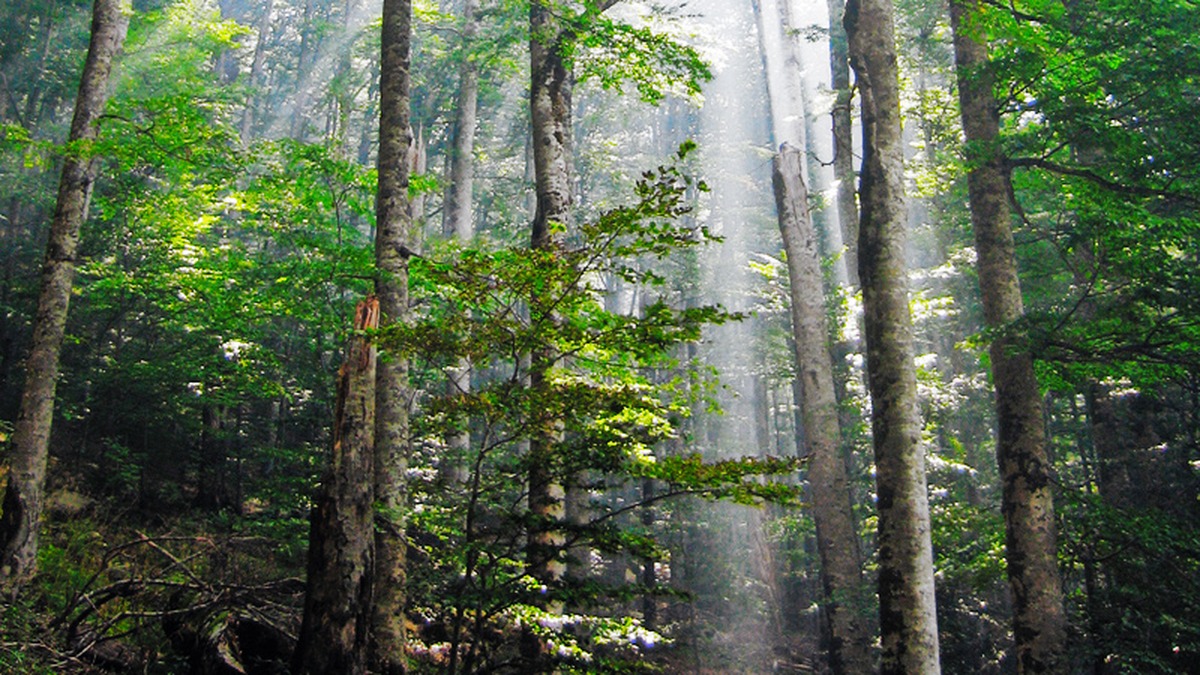
Old-growth forests represent the structural, biological, and ecological pinnacle of forest landscape succession. Distinct from uniform, even-aged industrial timber plantations, an ancient forest is characterized by deep structural complexity, monumental tree dimensions, multi-layered vertical canopies, and an immense abundance of dead wood in the form of standing dead snags and fallen coarse woody debris. Far from being biological wastelands or decadent timber reserves, old-growth ecosystems function as critical biodiversity hotspots, stable macro-carbon reservoirs, and hydrologic buffers. Understanding the developmental trajectory, structural attributes, deadwood succession dynamics, and ecological microclimates of old-growth forests is essential for guiding 21st-century woodland conservation and restorative arboriculture.
1. Defining Old-Growth: Structural Attributes vs. Chronological Stand Age
In classical forestry, stands were historically defined as ‘overmature’ or ‘decadent’ once individual trees passed their peak periodic annual increment of timber volume growth. Modern forest ecology has discarded this narrow economic view, recognizing that biological old-growth status is defined not solely by chronological years, but by the presence of a suite of diagnostic structural attributes that emerge only through centuries of uninterrupted development.
While the chronological age required to achieve old-growth characteristics varies widely—from 150 to 200 years in temperate eastern deciduous forests to 400 to 1,000+ years in Pacific Northwest conifer forests and ancient montane bristlecone pine stands—ecologists identify six universal structural hallmarks that distinguish ancient old-growth forests from secondary regrowth stands:
- Monumental Climax Trees: The presence of large-diameter, tall canopy trees approaching their maximum biological lifespan for the species and site, exhibiting complex crowns with thick, horizontal branches, broken tops, epicormic branch reiterations, and deeply fissured, furrowed bark plates.
- Multi-Layered, Vertically Continuous Foliage: Rather than a single uniform canopy tier, foliage is distributed continuously from emergent canopy tops down to subcanopy layers and understory regeneration patches.
- Substantial Abundance of Large Standing Snags: Standing dead trees of varied heights, diameters, and decay states, providing indispensable feeding substrates and hollow nest cavities for cavity-dependent wildlife.
- High Volumes of Coarse Woody Debris (CWD): Massive, fallen logs strewn across the forest floor in multiple stages of decomposition, acting as long-term moisture reservoirs, seedbeds, and fungal habitats.
- Pithe-and-Mound Topography: Micro-topographic relief created across centuries by windthrow events: when a giant tree falls, its uprooted root wad pulls up tons of mineral soil, creating a pit (depression) and adjacent elevated mound that generates diverse micro-habitats.
- Complex Epiphytic Communities: Thick, multi-layered carpets of mosses, liverworts, lichens, and ferns colonizing tree trunks and high canopy branches that require centuries of stable microclimates to assemble.
🌲 The Shift in Paradigm: Franklin and the Discovery of Old-Growth Value
Prior to the landmark ecological research conducted by Dr. Jerry Franklin and his colleagues in the 1970s and 1980s at the H.J. Andrews Experimental Forest in Oregon, conventional forestry manuals taught that old-growth forests were stagnant biological deserts where wood decay equaled wood growth. Franklin’s comprehensive biophysical audits proved precisely the opposite: ancient forests harbor the highest structural diversity, the greatest non-vascular plant biodiversity, the largest long-term carbon stocks, and the most specialized vertebrate habitat niches on the continent. Franklin established that the dead structural components—snags, logs, and root pits—are just as ecologically vital as the living trees.
2. Snag Ecology: The Five-Stage Decay Succession of Standing Dead Wood
When a massive canopy tree dies—whether struck by lightning, girdled by bark beetles, suffocated by root rot, or succumbing to drought-induced hydraulic failure—its ecological role does not terminate. It transitions into a snag (standing dead tree), initiating a multi-decade ecological succession that supports hundreds of specialized wildlife species.
Dendrologists and wildlife biologists classify snag deterioration into a standardized five-class decay succession model:
- Decay Class 1 (Recently Dead Snag): The tree has died within 1 to 3 years. Foliage may still be clinging or newly fallen; fine twigs and terminal branches remain intact. The bark is tight, healthy, and fully adhered to the trunk. Bark beetles (Scolytinae) and wood-boring beetle larvae (Cerambycidae, Buprestidae) colonize the phloem and cambium layers, attracting primary cavity-nesting woodpeckers (such as the Pileated Woodpecker Dryocopus pileatus) that excavate foraging holes to feed on beetle larvae.
- Decay Class 2 (Early Structural Loss): The snag has been dead for 3 to 10 years. All needles or leaves have dropped, along with most fine twigs. Secondary branches remain intact. Bark begins to loosen in patches, forming dry fissures. Woodpeckers now excavate round or oval nest cavities into the softer sapwood beneath the loosening bark.
- Decay Class 3 (Crown Collapse and Cavity Proliferation): The snag has stood for 10 to 25 years. The upper stem and dominant top branches have sheared off during winter storms. The sapwood has decayed extensively, softened by white-rot and brown-rot fungi. Woodpecker cavities are abandoned by original excavators and reoccupied by secondary cavity users—including flying squirrels, tree bats, barred owls, wood ducks, nuthatches, and martens. Sloughing bark sheets create dry shelter spaces for roosting forest bats (e.g., the endangered Indiana bat).
- Decay Class 4 (Softened Column/Broken Spire): The snag is now a weathered, broken spire or stub, typically standing between 3 and 10 meters tall, having stood for 25 to 50 years. Most bark has fallen off, and the outer wood is thoroughly punky, soft, and crumbly. Heartwood decay allows weak secondary excavators (such as chickadees) to hollow out shelters. Fungal brackets (such as Fomes fomentarius and Ganoderma species) fruit prolifically along the trunk.
- Decay Class 5 (Decomposed Stump): Only a low, crumbling stump remains (under 2 meters tall), covered in mosses and lichens. The wood is structurally unstable, collapsing easily under physical pressure, transitioning into soil-incorporated organic humus.
3. Coarse Woody Debris (CWD) and the Five Log Decomposition Classes
Once a snag breaks or a living tree is toppled by windthrow, it becomes coarse woody debris (CWD) on the forest floor. A single monumental log of Douglas-fir, Western Redcedar, or White Oak can measure 1 to 2 meters in diameter and 30 to 60 meters in length, weighing dozens of tons. This massive log will take between 100 and 400 years to fully decompose, functioning as an enduring ecological anchor across generations of human life.
Forest ecologists categorize fallen logs into five log decomposition classes, summarized in the comparative matrix below:
| Log Decay Class | Bark Condition | Structural Integrity of Wood | Cross-Section Shape | Log Position on Ground | Typical Colonizing Organisms |
|---|---|---|---|---|---|
| Class 1 (Fresh Fall) | 100% Intact, tight to stem | Solid, sound, difficult to penetrate with blade | Completely round | Elevated on branches above ground | Phloem-feeding bark beetles, pioneer molds, ambrosia beetles |
| Class 2 (Early Softening) | Partially loose or sloughing in strips | Outer sapwood soft; heartwood remains solid | Round | Sagging closer to soil surface | Wood-boring cerambycid larvae, carpenter ants, bracket fungi |
| Class 3 (Advanced Decay) | Trace to mostly absent | Soft in large chunks; heartwood still supports weight | Round to slightly oval | Resting firmly on ground over entire length | Salamanders, shrews, ectomycorrhizal fungal mats, wood roaches |
| Class 4 (Punky & Spongy) | Completely absent | Soft, fibrous, punky throughout; collapses when stepped on | Distinctly oval, flattened by gravity | Partially sunken into organic duff layer | Nurse log tree seedlings, bryophyte mats, velvet worms |
| Class 5 (Muck / Humus) | Completely absent | Soft, amorphous powdery muck; incorporates into soil | Flattened oval mound covered in moss | Entirely embedded within forest soil horizons | Burrowing soil invertebrates, fungal rhizomorphs, fine tree roots |
4. Nurse Logs: The Primary Regeneration Engine in Wet Forests
In temperate rainforests—such as the coastal hemlock-spruce-cedar forests of the Olympic Peninsula and British Columbia—the forest floor is often so densely carpeted by thick, suffocating layers of mosses, decaying duff, and aggressive understory shrubs (such as Gaultheria shallon and Vaccinium species) that tiny tree seeds cannot reach bare mineral soil or penetrate the dark bryophyte layer to germinate.
In these ecosystems, large fallen logs in Decay Classes 3 and 4 act as elevated nurse logs. A decomposing log serves as an ideal, protected seedbed for shade-tolerant conifer seeds—especially Western Hemlock (Tsuga heterophylla) and Sitka Spruce (Picea sitchensis):
- Elevated Light Regime: Suspended 1 to 2 meters above the dark, cold forest floor, seeds germinating along the crest of a fallen log receive substantially higher levels of diffuse photosynthetically active radiation than those falling in bottom depressions.
- Moisture Reservoir Capacity: Decaying wood acts as a giant sponge. The porous, cellular matrix of decomposed lignin and cellulose absorbs and holds astronomical volumes of water during rainy seasons, releasing moisture steadily during dry summer droughts. Even during severe midsummer heatwaves, the interior of a Class 4 log remains moist and cool.
- Freedom from Root Competition and Pathogens: Germinating on a raised log isolates fragile tree seedlings from aggressive ground-level herbaceous competitors and subterranean damping-off fungi (such as Pythium and Rhizoctonia) that kill seeds on the muddy forest floor.
As hemlock and spruce seedlings grow atop a nurse log, their roots cascade down the sides of the rotting log to anchor into the mineral soil below. Over decades and centuries, the nurse log beneath them slowly decomposes completely, disappearing into humus. The resulting mature trees remain standing on elevated, stilt-like roots that arch into the air, arranged in an unmistakable straight line across the forest floor—a living biological monument to the ancient nurse log that gave them life centuries before.
🏛️ Colonnades and Stilted Roots: Living Monuments
When hiking through an ancient temperate rainforest, dendrologists frequently encounter a phenomenon known as an arboreal colonnade: four to six massive, centuries-old Western Hemlock or Sitka Spruce trees growing in a perfectly straight line, spaced several meters apart. Beneath their trunks, the soil is hollowed out, their massive buttress roots straddling the air like flying buttresses on a Gothic cathedral. This architectural alignment is living proof that all six trees germinated atop the single trunk of an ancient fallen giant that died three to five hundred years ago.
5. Microclimatic Buffering and Thermal Refugia in Ancient Forests
The structural bulk and complex canopy stratification of old-growth forests generate profound microclimatic buffering that moderates extreme weather events. The physical thickness of the canopy foliage, coupled with the immense thermal mass of large-diameter trunks and moist coarse woody debris, insulates the forest interior against atmospheric volatility.
Key biophysical buffering mechanisms include:
- Subcanopy Temperature Inversion: On scorching summer afternoons when clearcut open fields or young plantations reach blistering temperatures exceeding 38°C to 42°C, the interior of an adjacent old-growth forest remains 6°C to 12°C cooler, maintaining high relative humidity (frequently 75 to 90 percent even in mid-afternoon).
- Evaporative Cooling via Hydraulic Redistribution: Massive old-growth trees draw hundreds of gallons of deep groundwater daily via extensive taproots, redistributing a portion into dry upper soil horizons at night (hydraulic lift) and evaporating moisture through transpiration, creating a persistent, natural air-conditioning effect.
- Wind Attenuation and Snow Catchment: Complex canopy structures dissipate turbulent wind gusts by up to 80 to 95 percent, shielding understory vegetation from mechanical damage. In winter, the multi-tiered canopy intercepts snowfall, releasing it slowly through melting and preventing deep, crushing crust formations on the forest floor.
Because of this stability, old-growth forests serve as indispensable climate change refugia. As regional climates warm and droughts intensify, sensitive organisms—including plethodontid lungless salamanders that breathe entirely through moist skin, sensitive lichens, and cold-water salmonids in forest-shaded headwater streams—can survive only within the buffered microclimatic sanctuaries provided by ancient woodlands.
6. Carbon Sequestration vs. Storage: Resolving the Old-Growth Carbon Debate
For decades, a major debate in forestry centered on whether old-growth forests continue to sequester carbon or become carbon-neutral. Early mid-20th-century ecological theory (most notably E.P. Odum’s classical successional models) posited that mature climax forests reach a static equilibrium where total photosynthetic carbon uptake exactly equals total ecosystem respiration (gross primary production = ecosystem respiration), meaning net carbon accumulation ceases.
Modern global dendrological research—including landmark studies published in Nature analyzing hundreds of thousands of individual trees worldwide—has overturned this dogma, demonstrating two critical principles:
- Continuous Individual Tree Sequestration: Individual trees do not stop sequestering carbon as they age. Rather, the absolute rate of wood biomass and carbon accumulation accelerates continuously with tree size. A single giant tree with a trunk diameter of 150 centimeters adds more absolute wood mass in a single year than an entire small pole-sized tree contains in its entire body. Because a giant tree supports hundreds of thousands of leaves and a vast photosynthetic area, its annual carbon deposition into wood increases throughout its life.
- Massive Ecosystem Carbon Stocks: Even if stand-level net primary production eventually moderates in very old forests, their carbon storage density (tons of carbon held per hectare in living wood, dead snags, fallen logs, and deep organic mineral soil) is vastly superior to any young forest. Temperate old-growth rainforests in the Pacific Northwest and southeastern Australia store between 600 and 1,200 tons of carbon per hectare—the highest carbon densities of any terrestrial ecosystem on planet Earth.
When an old-growth forest is logged and converted into a short-rotation industrial tree plantation (harvested every 30 to 50 years), over 60 to 75 percent of the total ecosystem carbon is lost to the atmosphere through soil respiration, slash burning, and rapid decomposition of paper and wood products, creating a carbon debt that takes centuries to repay.
7. Threats to Global Old-Growth Relicts and Conservation Imperatives
Today, intact primary old-growth forests represent only a tiny fraction of their historical global coverage. In Europe and the eastern United States, less than 1 to 2 percent of original pre-industrial old-growth remains, surviving only in inaccessible mountain gorges, national parks, and remote reserves.
Primary threats confronting remaining ancient forest relicts include:
- Targeted Commercial Salvage Logging: Following natural wildfire, windthrow, or beetle outbreaks, industrial logging operations frequently enter protected forest margins to ‘salvage’ standing dead snags and fallen logs. By removing dead wood, salvage logging strips the forest of the very biological legacies (snags, nurse logs, cavities) required for natural ecological recovery.
- Edge Effects and Fragmentation: Constructing roads and clearcut patches adjacent to old-growth relicts exposes ancient forest interiors to desiccating winds, elevated temperatures, and blowdown mortality along newly exposed boundaries. Microclimatic edge effects penetrate up to 200 to 500 meters into forest interiors.
- Altered Wildfire and Pest Regimes: Anthropogenic climate heating and prolonged megadroughts intensify wildfire severity, causing catastrophic stand-replacing crown fires in forest systems historically adapted only to low-severity surface fires.
8. Proforestation and Silvicultural Strategies for Cultivating Future Old-Growth
In response to the critical scarcity of ancient forests, conservation scientists have introduced the concept of proforestation: the intentional practice of allowing existing secondary forests to grow to their full ecological potential without timber harvesting or intervention.
Concurrently, ecological foresters are implementing structural enhancement silviculture to accelerate the development of old-growth attributes in young, uniform 50-to-80-year-old secondary stands:
- Variable-Density Thinning: Creating intentional openings, skips (unthinned dense patches), and heavily thinned zones to encourage horizontal branch expansion, multi-tiered canopy development, and understory regeneration.
- Deliberate Snag and Cavity Creation: Mechanically topping living co-dominant trees with chainsaws at heights of 10 to 15 meters, girdling trunks with wire or chemical inoculants, or boring artificial cavities to jumpstart snag decay succession decades earlier than would occur naturally.
- Coarse Woody Debris Recruitment: Felling selected large-diameter trees directly onto the forest floor to establish Class 1 and Class 2 coarse woody debris seedbeds and salamander refugia.
By safeguarding the irreplaceable ancient forests that still survive and actively stewarding secondary woodlands toward structural maturity, we preserve the complex ecological tapestries that have anchored forest life on Earth for millennia.