🌲 Field Dendrology Key: Bark Morphology
A comprehensive diagnostic monograph detailing the six major macroscopic bark texture classes: smooth, furrowed, scaly/plated, exfoliating/papery, shaggy, and fibrous. Includes comparative identification tables, ontogenetic transformations, and winter field keys.
For field naturalists and arborists, foliage is an ephemeral gift. In northern temperate and boreal forests, deciduous tree canopies discard their leaves for five to seven months of the year, transforming lush woodland vistas into stark, leafless winter landscapes. Furthermore, in mature old-growth forests, the lowest living branches of dominant canopy trees frequently tower 20 to 40 meters above the ground, positioning leaves, flowers, and fruits far beyond the range of unaided human vision or physical collection. In these demanding field scenarios, the single most reliable, accessible, and persistent diagnostic feature for tree identification is the bark of the trunk.
Every tree species carries a unique macroscopic bark signature. The geometric pattern of furrows, the presence of papery peeling curls, the development of mosaic-like rectangular plates, or the persistent porcelain smoothness of the trunk reflects the species-specific rate of secondary growth interacting with the anatomical frequency and orientation of secondary periderm meristems. While juvenile saplings frequently display smooth, uniform bark that appears ambiguous to beginners, mature bark develops distinct architectural characteristics that remain stable across centuries. This monograph provides an exhaustive field guide to identifying forest trees through bark morphology, classifying bark into six fundamental morphological classes with comparative diagnostic matrices.
1. The Mechanics of Bark Splitting: Circumferential Tension and Phellogen Geometry
To understand why different trees develop dramatically different bark patterns, one must grasp the simple geometry of a growing tree trunk. Each year, the vascular cambium divides, depositing a new cylinder of secondary xylem (wood) on its interior and a cylinder of secondary phloem on its exterior. As the wood cylinder expands in radius (r), the outer circumference (C = 2πr) must expand proportionally.
Because dead outer cork cells (phellem) cannot divide or stretch once suberized, this expanding circumference exerts intense circumferential tangential tensile stress upon the rhytidome. Eventually, the tensile strength of the dead bark tissue is exceeded, and the bark must split, crack, or peel. The macroscopic pattern that emerges is dictated by two biological parameters:
- Continuity of the Cork Cambium: If the phellogen forms a continuous, uninterrupted cylindrical sleeve around the trunk, the bark can peel off in complete circular sheets or horizontal curls (e.g., Birch). If the phellogen forms discrete, localized, overlapping curved shell-like patches (lenticular arcs), the outer bark is cut into individual shingles, scales, or blocks.
- Fiber Content and Toughness of Outer Phloem: If the secondary phloem contains dense, interlocking bundles of tough lignified fibers (sclerenchyma), the bark fractures along vertical grain lines into deep, persistent ridges and valleys (e.g., Oak, Ash). If fiber content is low and parenchymatous tissue dominates, the bark sloughs off in flaky crumbly scales (e.g., Pine, Black Cherry).
| Bark Texture Class | Defining Morphological Traits | Underlying Phellogen Anatomy | Representative Hardwood Species | Representative Conifer Species |
|---|---|---|---|---|
| Smooth (Elephantine) | Unbroken, taut, smooth surface; persistent across age | Continuous initial phellogen; rapid expansion dilation | Fagus grandifolia (Beech), Carpinus caroliniana (Hornbeam) | Abies balsamea (Balsam Fir, juvenile) |
| Furrowed / Ridged | Deep vertical fissures separating flat or peaked ridges | Discontinuous overlapping periderm arcs; tough fibers | Quercus rubra (Red Oak), Fraxinus americana (White Ash) | Pseudotsuga menziesii (Douglas-fir) |
| Scaly / Plated | Fragmented into discrete rectangular or polygonal plates | Layered horizontal and vertical periderm sheets | Prunus serotina (Black Cherry), Diospyros virginiana | Pinus ponderosa (Ponderosa Pine) |
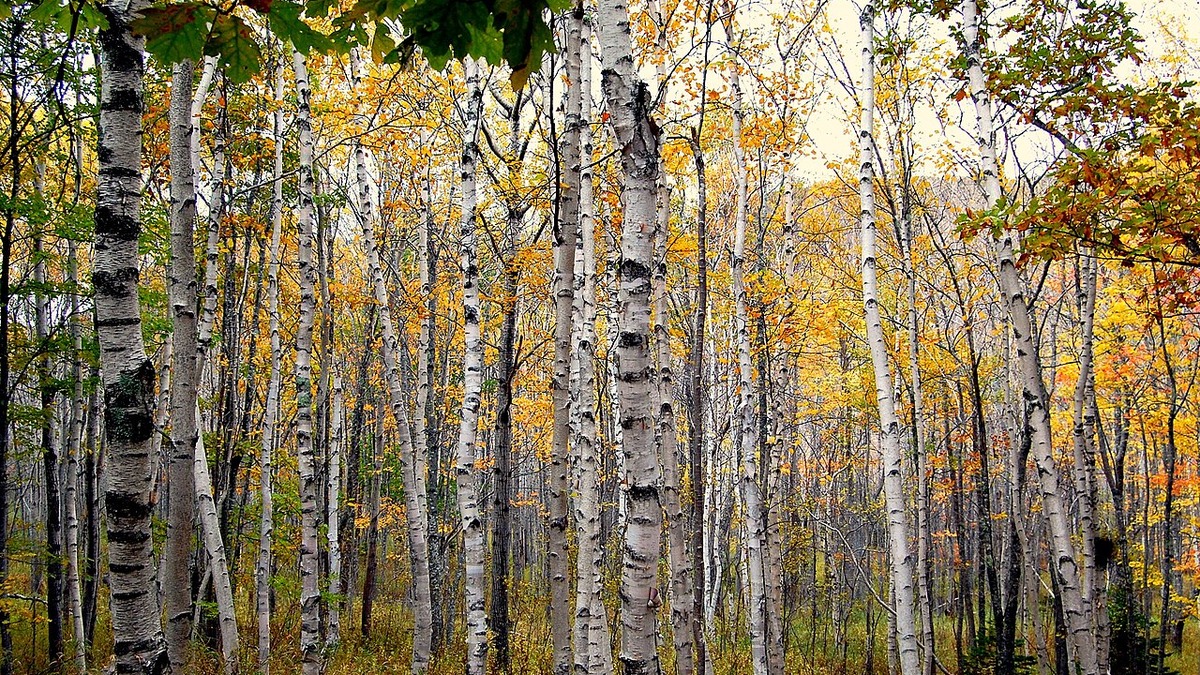
| Exfoliating / Papery | Peeling off in thin, parchment-like horizontal curls or sheets | Multiseriate cork zones with alternating thin-walled layers | Betula papyrifera (Paper Birch), Betula alleghaniensis | None in temperate gymnosperms |
| Shaggy / Strip-Peeling | Long vertical plates peeling free at both ends, hanging loosely | Long vertical phellogen bands; fibrous outer phloem | Carya ovata (Shagbark Hickory), Ostrya virginiana | Juniperus virginiana (Eastern Redcedar) |
| Fibrous / Spongy | Soft, thick, stringy, deeply channeled fibrous ridges | Thick parenchymatous cork saturated with air voids | Robinia pseudoacacia (Black Locust) | Sequoiadendron giganteum, Taxodium distichum |
2. Class 1: Smooth Bark (Beech, Hornbeam, and Mountain-Ash)
In most tree species, smooth bark is a temporary juvenile condition that gives way to furrowed or scaly textures within 10 to 20 years. However, in a select group of exceptional taxa, the bark remains remarkably smooth, taut, and porcelain-like throughout the entire multi-century lifespan of the tree:
1. American Beech (Fagus grandifolia): The quintessential smooth-barked hardwood. Mature beech trunks reach massive diameters exceeding one meter, yet their bark remains completely smooth, unbroken, and uniform ash-gray, famously compared to the wrinkled leg of an elephant. This enduring smoothness is achieved because the initial periderm initiated during the sapling’s first year remains active and living throughout the entire life of the tree, stretching circumferentially via active dilation division in cortical parenchyma without forming deep secondary rhytidome layers. Tragically, this smooth surface is heavily attacked by the exotic Beech Bark Disease complex (an invasive scale insect Cryptococcus fagisuga followed by canker fungi Neonectria spp.), which erupts in disfiguring pockmarks and blisters.
2. American Hornbeam / Musclewood (Carpinus caroliniana): Known colloquially as ‘Musclewood’ or ‘Ironwood,’ this understory tree displays smooth, slate-blue-gray bark stretched taut over twisting, fluted, sinuous trunk ridges that resemble flexing human biceps or sinewy animal tendons. The wood is exceptionally dense and heavy, and the trunk never forms furrowed plates.
3. Striped Maple / Moosewood (Acer pensylvanicum): In cool northern mountain understories, Striped Maple exhibits smooth, olive-green bark etched with striking, bright white vertical ribbons. The green tissue contains active chlorophyll in the phelloderm layer, allowing the bare winter trunk to photosynthesize when canopy leaves are absent.
3. Class 2: Furrowed and Ridged Bark (Oaks, Ashes, and Elms)
Furrowed bark represents the most common architectural class in northern temperate broadleaf canopies. It is characterized by alternating raised ridges and deep recessed valleys (furrows). The fine geometry of these ridges provides instant species-level identification:
1. Northern Red Oak (Quercus rubra) – The ‘Ski-Trail’ Ridges: On mature Northern Red Oaks, the upper and middle trunk exhibits wide, flat-topped ridges separated by shallow dark furrows. The centers of these flat ridges are smooth, shiny, and pale silver-gray, creating vertical lines that resemble downhill ski trails running down the trunk. Toward the base of very old trunks, ridges become thicker and more heavily broken, but the upper trunk consistently maintains these telltale ski-trail stripes.
2. White Ash (Fraxinus americana) – The Diamond Lattice: Mature White Ash bark is an aesthetic masterpiece of geometrical precision. The furrows and ridges interlace diagonally, forming an exceptionally tight, uniform, symmetrical diamond-shaped network. The ridges are narrow, sharp-edged, and firm to the touch, and the furrows are clean and deeply incised. When emerald ash borer (Agrilus planipennis) attacks the tree, foraging woodpeckers flake off the outer ridge tops (‘blonding’), revealing bright golden-tan inner bark beneath.
3. American Elm (Ulmus americana) – Interlacing Spongy Ridges: Elm bark features thick, interlacing vertical ridges that feel slightly spongy or yielding under thumb pressure. The definitive forensic test for American Elm bark involves snapping off a small cross-section of a mature ridge and examining its edge: American Elm exhibits alternating, distinct zebra-like layers of reddish-brown cork and creamy-buff parenchyma (cork wafers), a trait shared by few other native hardwoods.
Chestnut Oak vs. Sassafras: Heavy Furrows Compared
Chestnut Oak (Quercus montana) displays the deepest, heaviest furrows of any eastern hardwood. On rocky ridge crests, mature trunks feature enormous V-shaped furrows up to 7 to 10 centimeters deep, separated by continuous, blocky, rock-hard ridges that resemble ancient tectonic mountains. Sassafras (Sassafras albidum) also develops deep, soft, cinnamon-brown furrows, but can be distinguished immediately by slicing into a furrow with a pocketknife: freshly exposed inner bark of Sassafras releases an intense, sweet aroma of root beer and safrole oil.
4. Class 3 & 4: Exfoliating, Papery, and Shaggy Barks
When dead rhytidome fails to stay firmly attached to the trunk, it sloughs off in dramatic peeling sheets, plates, or curling ribbons:
1. Shagbark Hickory (Carya ovata): The undisputed king of shaggy-barked trees. At maturity, the gray outer bark splits vertically into long, wide, curved plates (often 30 to 90 centimeters long and 8 to 15 centimeters wide). These plates curl outward at the top and bottom while remaining anchored in the middle, giving the tree a wildly disheveled, shaggy silhouette. The curled plates provide vital microclimatic roosting habitat for endangered forest bats (such as the Indiana Bat, Myotis sodalis), which shelter beneath the peeling slabs from predators and rain.
2. Paper Birch (Betula papyrifera) vs. Yellow Birch (Betula alleghaniensis): In Paper Birch, the brilliant white outer bark peels off in large, thin, horizontal sheets that roll into tight curls. The bark is waterproof, pliable, and saturated with flammable betulin oils, making it the historic material of choice for indigenous birchbark canoes. In Yellow Birch, the bark is shimmering bronze-gold to amber-metallic, peeling off in thousands of delicate, paper-thin, curly ringlets that fringe the trunk like wood shavings; scratching a young twig releases a potent wintergreen aroma of methyl salicylate.
3. Sycamore / Planetree (Platanus occidentalis) – Camouflage Exfoliation: Sycamore bark provides one of the most astonishing visual spectacles in the forest. The dark brown juvenile outer bark cannot expand as fast as the massive, rapidly growing trunk beneath it. Consequently, the outer bark brittlely fractures and flakes off in large jigsaw puzzle pieces, exposing brilliant creamy-white, olive-green, and lemon-yellow inner bark beneath. The upper canopy branches of mature sycamores appear completely bone-white and ghostly against the winter sky.
5. Class 5: Scaly and Plated Barks (Cherry, Persimmon, and Pines)
In scaly and plated barks, the rhytidome breaks along intersecting horizontal and vertical fissures, generating small, discrete geometric tiles:
- Black Cherry (Prunus serotina) – ‘Burnt Potato Chips’: Mature Black Cherry bark is iconic. It breaks into hundreds of small, irregular, rounded, dark reddish-black to charcoal scaly plates with distinctly upturned, curled margins. The texture is famously described by dendrologists as resembling a dense cluster of ‘burnt cornflakes’ or ‘burnt potato chips’ glued to the trunk.
- Common Persimmon (Diospyros virginiana) – Alligator Hide: Persimmon bark breaks into small, thick, dark charcoal-black square or hexagonal blocks separated by deep, clean fissures, creating a texture virtually indistinguishable from the blocky scutes of an alligator’s back (‘alligator hide’ bark).
- Ponderosa Pine (Pinus ponderosa) – Jigsaw Puzzle Armor: Mature Ponderosa Pines feature immense, flat, cinnamon-orange plates separated by deep black fissures. The surface of these plates flakes off in thin, jigsaw-puzzle-shaped scales that release an intoxicating scent of vanilla, butterscotch, and warm pine resin on sunny afternoons.
6. Field Identification Protocol: The Bark Diagnostic Checklist
When encountering an unknown leafless tree in the field, systematically evaluate these four physical criteria:
- Assess Texture: Is the bark smooth, vertically furrowed, peeling in horizontal curls, hanging in shaggy slabs, or broken into small square tiles?
- Check Ridge Tops: Are ridges flat-topped and striped with silver ski trails (Red Oak)? Interlocking into diamonds (White Ash)? Or soft and fibrous (Black Locust)?
- Inspect Color and Flakes: What is the color of the inner bark exposed inside furrows or beneath flakes? Cinnamon-orange indicates Red Oak or Ponderosa Pine; bright lemon-yellow indicates Black Oak (Quercus velutina); chocolate brown indicates Elm.
- Test Olfactory Cues: Gently scratch a live twig or shave a minute flake inside a furrow: wintergreen aroma indicates Yellow Birch; root beer indicates Sassafras; bitter almond (cyanogenic glycoside) indicates Black Cherry.
By mastering these macroscopic keys, the forest reveals its secrets year-round, regardless of snow, wind, or the absence of summer foliage.
7. Bark Ecological Microhabitats: Lichens, Bryophytes, and Epiphytes
Tree bark does not exist in isolation; it constitutes a thriving, three-dimensional vertical ecosystem (the corticolous habitat). The physical micro-relief of bark—its furrow depth, moisture retention capacity, and surface pH—dictates the specific communities of lichens, mosses, liverworts, and micro-invertebrates that colonize the trunk.
For example, trees with alkaline or neutral bark chemistry, such as American Elm (Ulmus americana, pH 6.0 to 7.0) and White Ash (Fraxinus americana), host rich assemblages of nutrient-demanding crustose lichens (such as Physcia and Xanthoria). In stark contrast, trees with highly acidic, tannin-saturated bark—such as Eastern Hemlock (Tsuga canadensis, pH 3.0 to 3.8) and Chestnut Oak—support acid-tolerant fruticose lichens (such as Cladonia) and dense cushions of specialized mosses (such as Dicranum scoparium). These epiphytic corticolous mats trap atmospheric moisture, intercept airborne dust nutrients, and provide critical foraging substrate for bark-gleaning woodland birds including Nuthatches (Sitta spp.) and Brown Creepers (Certhia americana).